

This change must be offset by a $500 increase in Total Liabilities or Total Equity. On the left side of the Accounting Equation Storyteller’s Corner has Total Assets of $100,000. On the right, they have Total Liabilities of $70,000 and Total Equity of $30,000.
How Does the Accounting Equation Differ from the Working Capital Formula?

Modern accounting software simplifies the application of the accounting equation by automating transaction recording and ensuring real-time accuracy. These tools integrate with other systems, such as inventory management and payroll, providing a comprehensive view of a company’s financial activities. The monthly trial balance lists account names from the chart of accounts with total account balances or amounts. Total debits and credits must be equal before posting transactions to the general ledger for the accounting cycle. Assets represent the valuable resources controlled by a company and liabilities represent its obligations. Both liabilities and shareholders’ equity detail how the assets of a company are financed.
Question: The accounting equation can be stated as: (A) A−L+OE=0. (B) −A+L−OE=0. (C) A−L−OE=0. A+L−OE=0

Shaun Conrad is a Certified Public Accountant and CPA exam expert with a passion for teaching. After almost a decade of experience in public accounting, CARES Act he created MyAccountingCourse.com to help people learn accounting & finance, pass the CPA exam, and start their career. Explore occupations by career categories and pathways and use real time labor market data to power your decision making. You can start learning these accounting skills today with Forage’s accounting and finance virtual experience programs. Using Apple’s 2022 earnings report, we can find all the information we need to fill in the accounting equation. The global adherence to the double-entry accounting system makes the account-keeping and -tallying processes more standardized and foolproof.

CompanyCompany
- Many people mistakenly believe that the accounting equation is only relevant for large corporations with complex financials.
- The accounting equation helps to assess whether business transactions carried out by the company are being accurately reflected in its books and accounts.
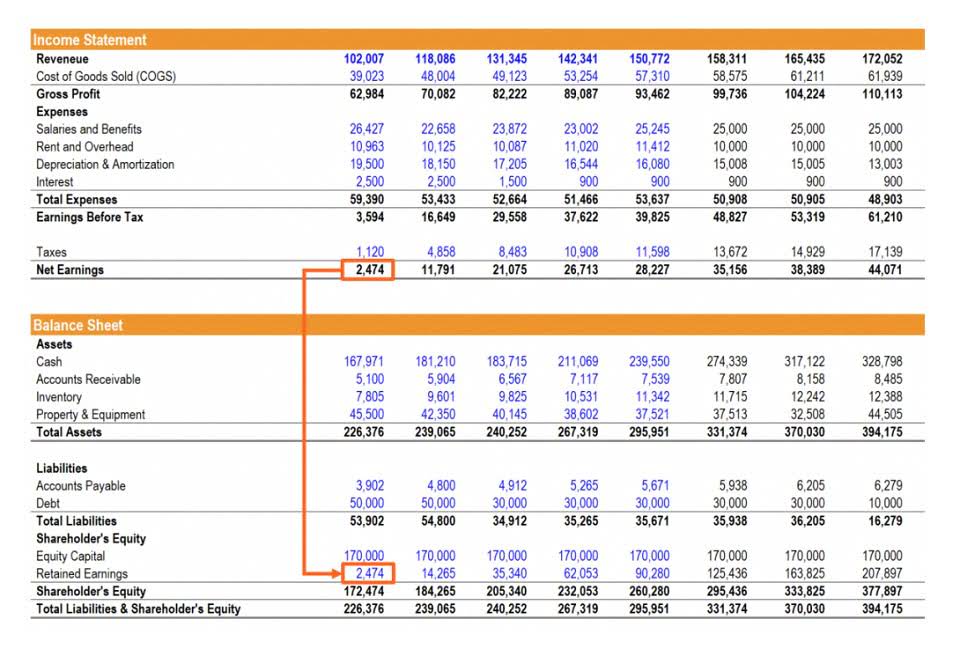
- In fact, the equation for determining how much equity a company has is subtracting the company’s liabilities from its assets.
- The left-side value of the equation will always match the right-side value.
- It allows stakeholders to analyze how their investment, sales, or other inputs affect the company’s financial health and dollar value.
- The accounting equation ensures that a company’s financial records remain balanced and accurate, forming the foundation of double-entry accounting.
Gain control, reduce errors, and improve financial accuracy with expert strategies. Equity is named Owner’s Equity, Shareholders’ Equity, or Stockholders’ Equity on the balance sheet. Business owners with sole proprietorships and small businesses that aren’t corporations use Owner’s Equity. Corporations with shareholders may call Equity either Shareholders’ Equity or Stockholders’ Equity. This number is the sum of total earnings that weren’t paid to shareholders as dividends. Factors that shape an accounting information system include the nature of the business, size of the firm, and volume of data to be processed.
- Barbara has an MBA from The University of Texas and an active CPA license.
- One is to consider equity as any assets left over after deducting all liabilities.
- Net Assets is the term used to describe Assets minus Liabilities.
- The accounting equation ensures that the balance sheet remains balanced.
- Corporations with shareholders may call Equity either Shareholders’ Equity or Stockholders’ Equity.
At the same time, they have increased the balance in their checking account. From a bookkeeping perspective, you have to make two entries for this one business transaction, and these two entries balance each other out. Obligations owed the accounting equation can be stated as to other companies and people are considered liabilities and can be categorized as current and long-term liabilities. A balanced accounting equation starts with an efficient AP process.
- The accounting equation is a factor in almost every aspect of your business accounting.
- The global adherence to the double-entry accounting system makes the account-keeping and -tallying processes more standardized and foolproof.
- Unearned revenue from the money you have yet to receive for services or products that you have not yet delivered is considered a liability.
- This alignment ensures the balance sheet always reflects a company’s financial position accurately.
- This is the amount of money shareholders have contributed to the company for an ownership stake.
- It simplifies tracking financial performance and planning for tax liabilities.
The accounting equation states that the amount of assets must be equal to liabilities plus shareholder or owner equity. As the fintech industry provides advanced technology applications, memorizing elements of the accounting equation will become obsolete. Well-managed businesses strive to free up human labor to work on value-based vs. routine accounting tasks while automating manual https://floorthreedesigns.com/become-a-certified-proadvisor-quickbooks-intuit-12/ processes. The best accountants and finance professionals need this extra time to contribute to better business results.